
School pencil cases


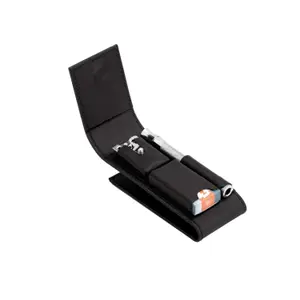


A pencil case is chosen based on the volume of materials to carry, not the design. Our category includes flat formats for primary school, round models that stand on the table, and double compartment cases for secondary school.
School pencil cases come in three formats: the flat case for a few pens, the round case that holds a full range of felt-tip pens, and the two or three compartment case that separates writing tools from geometry equipment. The format is decided based on the class supply list, never just on the printed version.
Choosing a school pencil case suitable for the student's level
In primary school, flat cases are enough: a ballpoint pen, an eraser, a correction pen and some felt tips fit inside, keeping the bag light. In secondary school, the compass, set square, and highlighters require a round volume or a double compartment. In college, two pencil cases are better than one, one for writing and the other for technical drawing, which avoids emptying everything out onto the table each lesson.
Flat cases, round cases and flap models
The flat case slips into a binder but loses its shape as soon as it’s filled. The round case offers the greatest useful volume and stands upright, which prevents rummaging at the bottom. Flap models or those with two pockets keep the felt tips on one side and the geometry tools on the other. Transparent cases allow you to see the contents at a glance, which is required by some schools for exams.
Filling a school pencil case before the new school year
Supply lists are similar from one class to another, and the volume of the pencil case is determined by what it needs to hold:
- writing: four-colour ballpoint pen, fountain pen, correction pen, eraser
- colour: felt tips, pastels, highlighters, which alone determine the format
- geometry: flat ruler, set square, compass, which require a long case
- gluing and cutting: glue stick, round-tipped scissors
Original school pencil cases, with all-over prints or embroidered designs, are just as important as the bag for the student. Matching school pencil cases to the backpack and to the school bag remain the most common back-to-school reflex.