
Travel bags and duffle bags


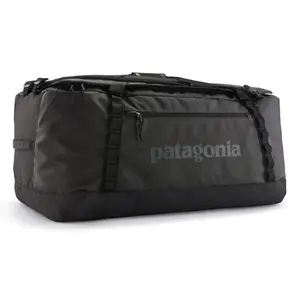
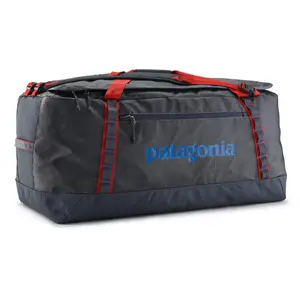


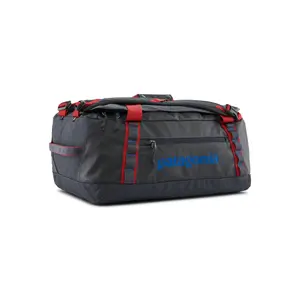
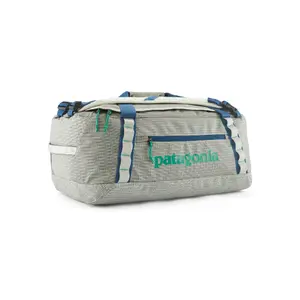


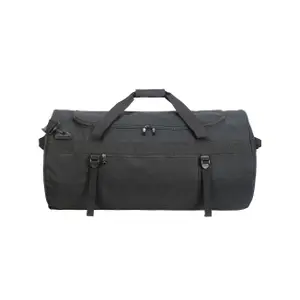




Soft travel bags, duffel bags and holdalls from Eastpak, adidas, Nike, Samsonite or The North Face. Choose the capacity in litres, shoulder or backpack carrying options, with or without wheels, and the size that fits in the cabin.
A travel bag is a soft bag, without a rigid shell, that can be carried by hand, over the shoulder or on your back, and it can be stored flat when empty. Three main shapes dominate: the soft bag with pockets, the Duffle bag, which is cylindrical, and the holdall. It is chosen based on its capacity, how it can be carried, and its cabin size.
Soft travel bags, Duffles and backpacks
Soft travel bags open from the top, have multiple pockets and can be stored flat when empty. The cylindrical Duffle bag, derived from the pack bag, can hold irregular volumes like shoes, helmets, sports gear, where a suitcase has its compartments, and the holdall is its shorter version without a frame. The third category, the most misunderstood in the market, is the backpacking travel bags, which are recognisable by their stowable shoulder straps stored in a zipped pocket. They are not hiking backpacks, lacking a frame or a waist belt; their comfort stops at the journey from the station to the hotel. Our Duffle bags mainly come from adidas, Nike, and The North Face, while the soft travel bags come from Eastpak, Samsonite, Napapijri, and Dakine.
Wheeled travel bags: what we gain, what we lose
Wheeled travel bags free your shoulders in an airport hall or on a train platform, and that’s their real advantage. What no one mentions is the price you pay: the frame, telescopic handle, and rigid bottom weigh down the bag before you even start loading, they take up length, and a bag with wheels can no longer be folded. Stairs, cobblestones, sand, tight connections: you end up carrying it anyway, with a higher empty weight. Use wheels for smooth journeys with heavy loads, and no wheels when climbing stairs.
The capacity of a travel bag based on the length of stay
The volume in litres is the only comparable measure between models, and it’s where you should start. We recommend counting 30 to 40 litres for two or three nights, 50 to 70 litres for a week, and beyond that, you’re looking at a XXL travel bag for long trips. A second measure commonly used in the market but never explained: in the hold, the limit isn’t just one dimension but cumulative dimensions, length plus width plus height, with a threshold specific to each airline.
Which travel bag fits as cabin baggage without extra charge?
The cabin size isn’t a feature of the bag, it’s an airline rule, and it can change without notice. Two sizes come up in searches, 40x30x20 and 45x36x20, but the actual accepted dimensions depend on the airline and the ticket: we list them one by one, along with their date, in our Cabin Luggage category. A soft model can compress into the testing size where a hard suitcase offers no give, but handles, wheels, and full external pockets count towards the measurement. Cabin travel bags are chosen based on their actual dimensions, with straps tight.
Soft travel bag or wheeled: what matters
Two travel bags from the same range often come from the same mould: the label indicates the colour, but rarely the purpose. Three points from the product sheet are worth more than a checkbox:
- the length and adjustment of the shoulder strap, which affect cross-body carry when both hands are occupied;
- the empty weight, which counts double for a bag worn on the shoulder all day;
- the material: leather ages well but is heavy and afraid of rain, while a coated fabric can be wiped clean in one go.
The foldable and non-wheeled models are grouped in our Soft Travel Bags category, the cylindrical shapes in Duffle Bags, and selections by brand in adidas, Eastpak, Dakine, Nike, and American Tourister.
Travel bags on sale change with commercial operations: the price banner on the label shows the current price, but not the page.
Our category Travel Bags in detail
- Types
- Top Brands