
Bike handlebar bags


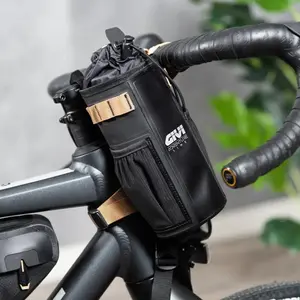


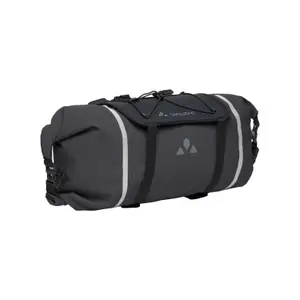
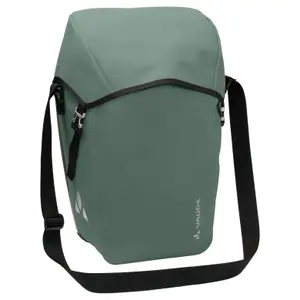


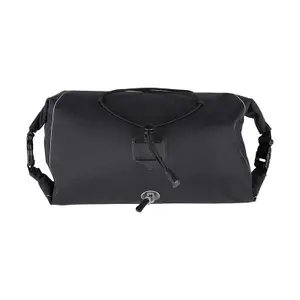
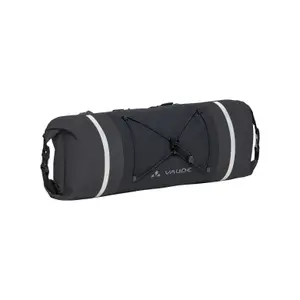
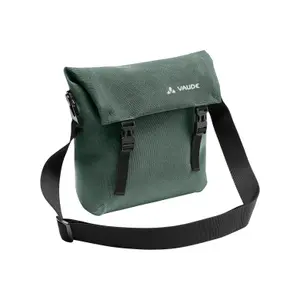

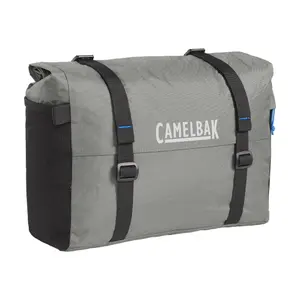


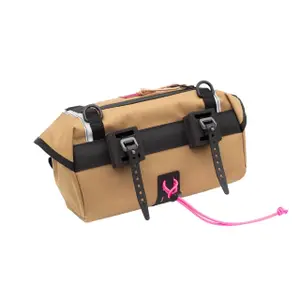


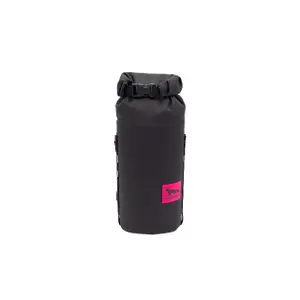

Fixed to the handlebars, the handlebar bag shows today’s essentials: bag rolled and strapped for bikepacking, removable click bag for the city, and a handlebar pouch for the phone, keys, and snacks.
A handlebar bag attaches to the handlebars, either alone or on a bracket that keeps it away from the cables. There are two types: the rolled bikepacking bag, which is long and cylindrical, perfect for stuffing with down and clothes, and the city bag with a quick release that detaches with a click and can be carried by hand.
Handlebar bag for gravel and bikepacking
The rolled handlebar bag is tightened with two straps and closes at both ends, allowing it to be compressed when partially loaded. There needs to be clearance everywhere: between the levers, between the bottom of the bag and the front wheel when the fork compresses, and for hands in the drop position. A gravel handlebar bag is usually mounted on a spacer harness; otherwise, the fabric crushes the cables and makes braking harder. On flared handlebars, measure the usable width between the levers, not the total width.
Handlebar mounting and cable clearance for the bag
There are three types of mounts: a hook on a support, which can be removed with one hand; direct velcro straps, which are lighter but pinch the cables; and the spacer harness, reserved for larger loads. A bike handlebar bag that's loaded will affect steering, making it heavier at low speeds and possibly causing the handlebars to vibrate when descending. On an e-bike, finally check that nothing obstructs the display or the thumb control.
Waterproof handlebar bag for rain and mud
The front wheel throws water straight at the front of the bag, which is the most exposed part of the bike. A waterproof bike handlebar bag made of welded fabric with a roll top is the safest option, better than a covered zip. A city bike handlebar bag made from coated fabric can handle a shower but not immersion, so plan for a pouch for the papers. A bikepacking handlebar bag can be rinsed off with a hose, as long as the lining is smooth and has no stitched seams at the bottom. Ortlieb, Restrap and Basil cover these three uses well.