
Wheeled suitcases


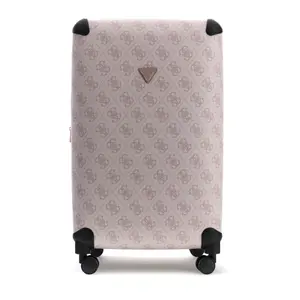


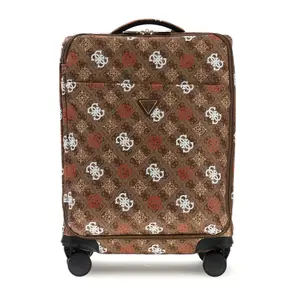


Wheeled suitcases to roll smoothly in a train station or airport: four swivel wheels to glide beside you, two angled wheels for cobblestones and sidewalks. Hard shell or fabric, cabin or hold size.
A wheeled suitcase is first judged by its wheels: four rotating wheels allow the luggage to glide vertically on a smooth surface, while two angled wheels handle cobblestones and curbs better. Next comes the telescopic handle, which should be sturdy when extended, and the empty weight of the shell.
4-wheeled or 2-wheeled suitcases, what's different in use
4-wheeled suitcases can spin in place and can be pushed with one hand down an airport corridor, without placing strain on the wrist. The two-wheeled models keep their wheels tucked away from the shell, protected from impacts, and can navigate curbs without tipping over. On a train platform, the choice is quickly made: smooth surfaces and long distances favour four rotating wheels, while paved city streets and stairs are better suited for two angled wheels.
How to identify sturdy wheels on a wheeled suitcase
Turn each wheel by hand; it should continue to roll for a moment on its own, indicating a good bearing rather than a rubbing axle. A sturdy wheeled suitcase mounts its wheels on a screwed plate rather than glued, allowing for wheel replacement without needing to touch the shell. Noise is another indicator: a rubber wheel is quiet where a hard plastic wheel echoes in a hall. The most reliable wheeled suitcases also feature a telescopic handle with multiple settings, locked without lateral play.
Cabin or hold, which wheeled suitcase for which trip
For a two-day round trip, a cabin-sized wheeled suitcase is enough and saves you waiting at the carousel: measure the three dimensions including pockets and wheels, and then compare with the size guide published by the airline, which varies from carrier to carrier. For trips longer than a week, hold luggage becomes more comfortable, even if you need to add a compression bag. The budget option makes sense for a wheeled suitcase, as long as you check the wheels and handle before looking at the price tag. A well-chosen wheeled suitcase can last for several years.