
TSA locks


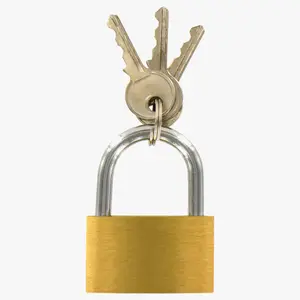
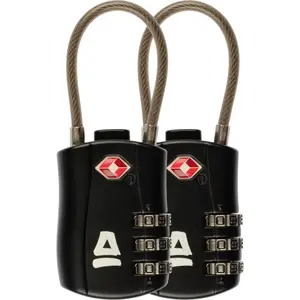


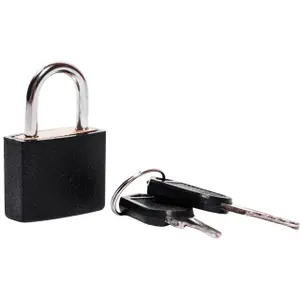


Our category brings together combination and key TSA locks, short shackles for close-fitting hard shell zippers, flexible cables for backpacks, with an opening indicator on some models.
A TSA lock is a padlock equipped with a service lock designed to be opened by American security agents using a key, without cutting the shackle or forcing the zipper of the luggage. The traveler opens it with a combination or key, just like a regular padlock. The opening indicator then signals that an inspection has taken place.
What sets a TSA lock apart from a regular padlock
The difference lies in the service lock. A TSA lock has a logo and a key entry that allows for inspection without destruction, whereas a regular padlock ends up cut if the luggage needs to be opened. Many models add a disc that changes colour when the service lock has been used. Check the engraving on the body of the padlock before purchase, as it is the only proof of the standard.
Combination TSA lock or key TSA lock
The combination eliminates the risk of losing the key, which is its real advantage, and it requires remembering a code that is only used two or three times a year. The key is quicker in use but travels poorly if it remains in the bag it locks. A TSA combination lock can be shared among family members without duplication. A TSA lock for suitcase with a short shackle causes less hassle with closely spaced zippers on a hard-shell bag.
Using a padlock without damaging a suitcase's zipper
The shackle goes through both pull tabs, never through the fabric or a strap loop that gives way at the first pull. On a backpack, a flexible cable connects two distant fasteners where a short shackle won't fit. The question that keeps coming up is whether a TSA lock is mandatory. The answer can be found in the transport conditions of the airline and the regulations of the destination country, as these are what matter. Knowing for which countries a TSA lock actually makes a difference requires checking the website of the appropriate security authority, not a forum.